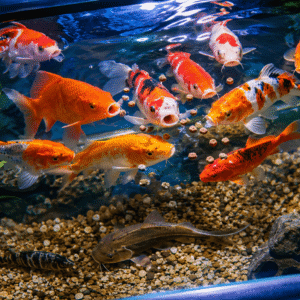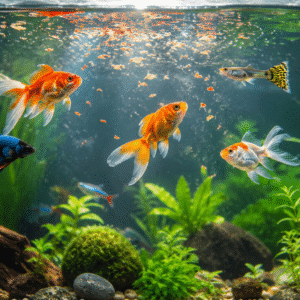
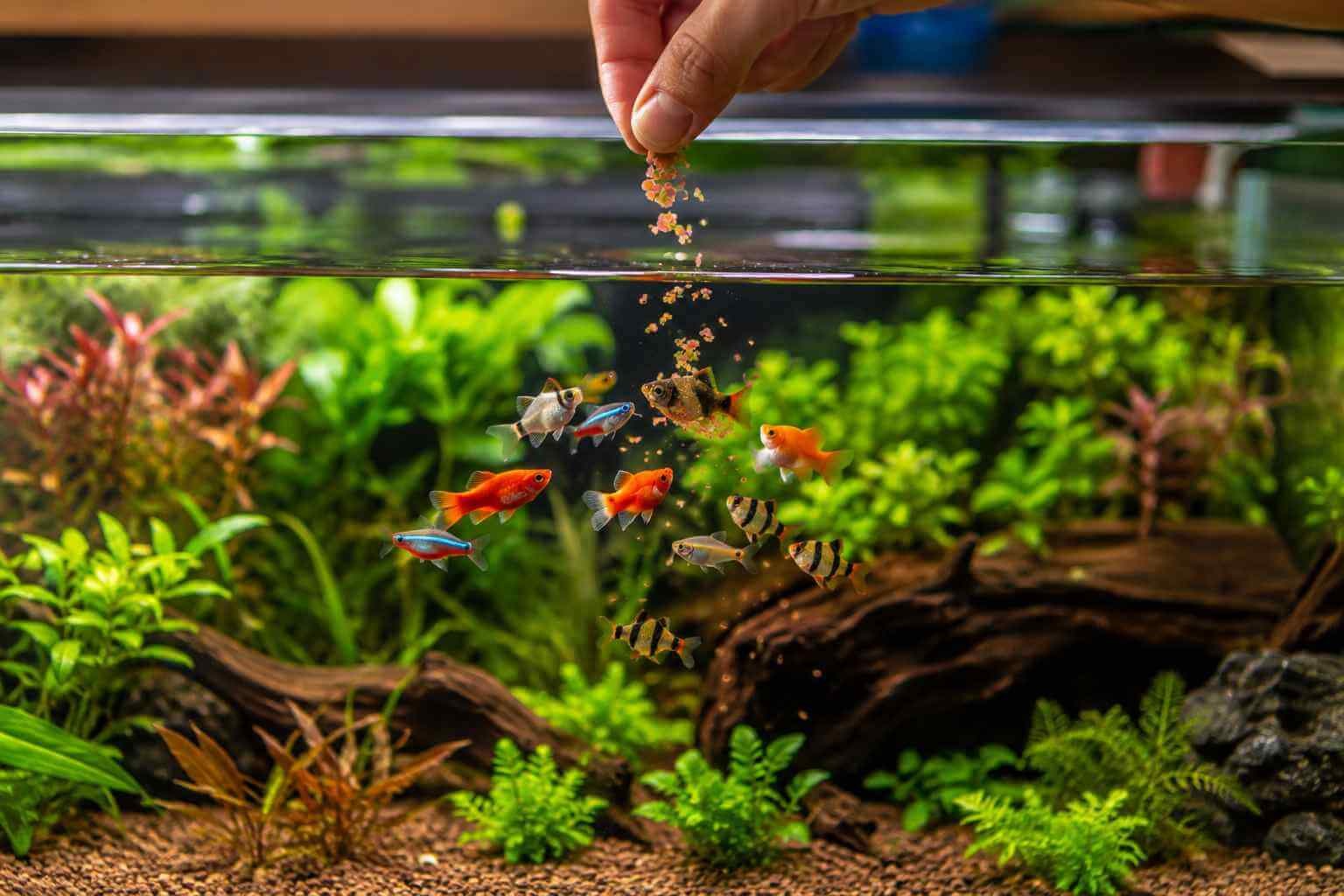
If your aquarium water keeps turning cloudy, algae won’t stop spreading, or your fish seem sluggish no matter what you try, the problem might not be your filter or your water changes, it might be sitting in your hand every time you open the food container. Feeding looks like the simplest part of fishkeeping, but it’s also where most beginner (and plenty of experienced) aquarists quietly sabotage their own tanks.
Below are five of the most common fish feeding mistakes, why they matter, and exactly how to fix each one.
1. Overfeeding Fish “Because They Look Hungry”
This is, hands down, the number one cause of tank problems. Fish rush to the glass and swarm around every time you approach not because they’re starving, but because they’ve learned that your presence means food might be coming. It’s easy to mistake that excitement for hunger and respond with an extra pinch “just in case.”
The problem is that fish don’t have a strong sense of fullness. If food is available, most species will keep eating it. Any food that isn’t consumed within a few minutes starts to break down, releasing ammonia and nitrites into the water. That’s what triggers cloudy water, algae blooms, and stressed, disease-prone fish.
How to fix it:
- Feed only what your fish can finish within 2–3 minutes.
- Use a pinch or a measured feeding tool instead of eyeballing a handful.
- Remove any uneaten food with a net or siphon after each feeding.
- Try skipping one feeding day per week, most healthy adult fish handle a “fasting day” without any issue, and it gives their digestive system a break.
2. Feeding on the Wrong Schedule
There’s no single “correct” number of feedings per day. It depends on the species, their age, and the water temperature. But a lot of aquarists either feed on an inconsistent schedule (skipping days, then overcompensating) or default to feeding multiple times a day out of habit rather than need.
Inconsistent feeding stresses fish and makes it harder to judge portion sizes accurately, while unnecessary extra feedings simply add more waste to the tank without any real benefit to the fish.
How to fix it:
- Most adult community fish do well with one to two feedings a day, roughly 12 hours apart.
- Fry and very small or high-metabolism species may need smaller, more frequent feedings.
- Pick a consistent time, ideally 10–15 minutes after the tank light turns on, so fish are alert and ready to eat.
- Adjust for temperature: cooler water slows fish metabolism, so cold-water species like koi need less food in winter.
3. Using the Wrong Type of Food
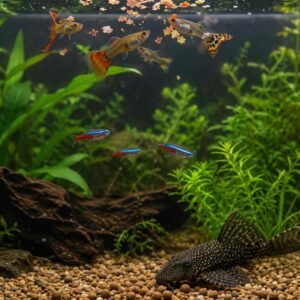
Not all fish eat the same way, and a “one food fits all” approach is a common feeding mistake. Bottom feeders like corydoras and loaches need sinking pellets or wafers, while surface feeders like bettas and guppies rely on floating flakes. Herbivorous species need more plant matter than a standard flake formula provides, and carnivorous fish need higher protein content.
Feeding the wrong food type often means some fish in a mixed tank go underfed while others overeat, and it can also mean uneaten food sits in the wrong part of the tank where it’s harder to notice and remove.
How to fix it:
- Match the food format (flake, pellet, sinking wafer, gel, live/frozen) to your fish’s natural feeding zone and diet.
- For mixed tanks, offer a combination, for example, flakes for surface feeders plus sinking pellets for bottom dwellers.
- Avoid feeding human food scraps like bread or rice; they’re difficult for fish to digest and pollute the water quickly.
- Research your specific species’ dietary needs, since herbivores, omnivores, and carnivores all require different nutrient ratios.
4. Ignoring Uneaten Food and Leftovers
Even aquarists who get portion sizes and schedules right can still run into trouble if they don’t clean up afterward. Leftover food that sinks into gravel or gets pulled into a filter intake continues decomposing out of sight, quietly raising ammonia levels long after feeding time is over.
This is one of the sneakier fish feeding mistakes because the water can look clear for a while even as waste builds up beneath the surface, in decorations, or inside the filter media.
How to fix it:
- Do a quick visual check 5 minutes after every feeding and remove anything left over.
- Use a gravel vacuum during routine water changes to pull out debris that’s settled into the substrate.
- Rinse or replace mechanical filter media regularly, since it traps a surprising amount of uneaten food.
- If cloudy water or a foul smell shows up consistently, treat it as a sign to cut back on portions, not just a sign to clean more.
5. Feeding the Same Amount Regardless of Tank Size or Fish Load
A feeding amount that’s appropriate for a lightly stocked 20-gallon tank can quickly overwhelm a smaller or more heavily stocked one. Many aquarists set a feeding routine early on and never adjust it, even after adding new fish, upgrading tank size, or losing fish over time.
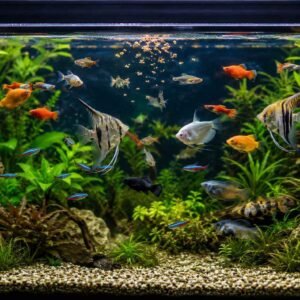
The waste a tank can safely process depends on its biological filtration capacity, which is tied to tank size, plant load, and how established the beneficial bacteria colony is. Feeding the same static amount without accounting for these changes is a common way tanks that were previously stable start to develop water quality issues.
How to fix it:
- Recalculate your feeding portions any time you add, remove, or upsize your fish population.
- In smaller or newer tanks, err on the side of feeding less the bacterial colony that processes waste takes weeks to establish.
- Keep an eye on ammonia and nitrite levels with a test kit, especially after any change to your stocking or feeding routine.
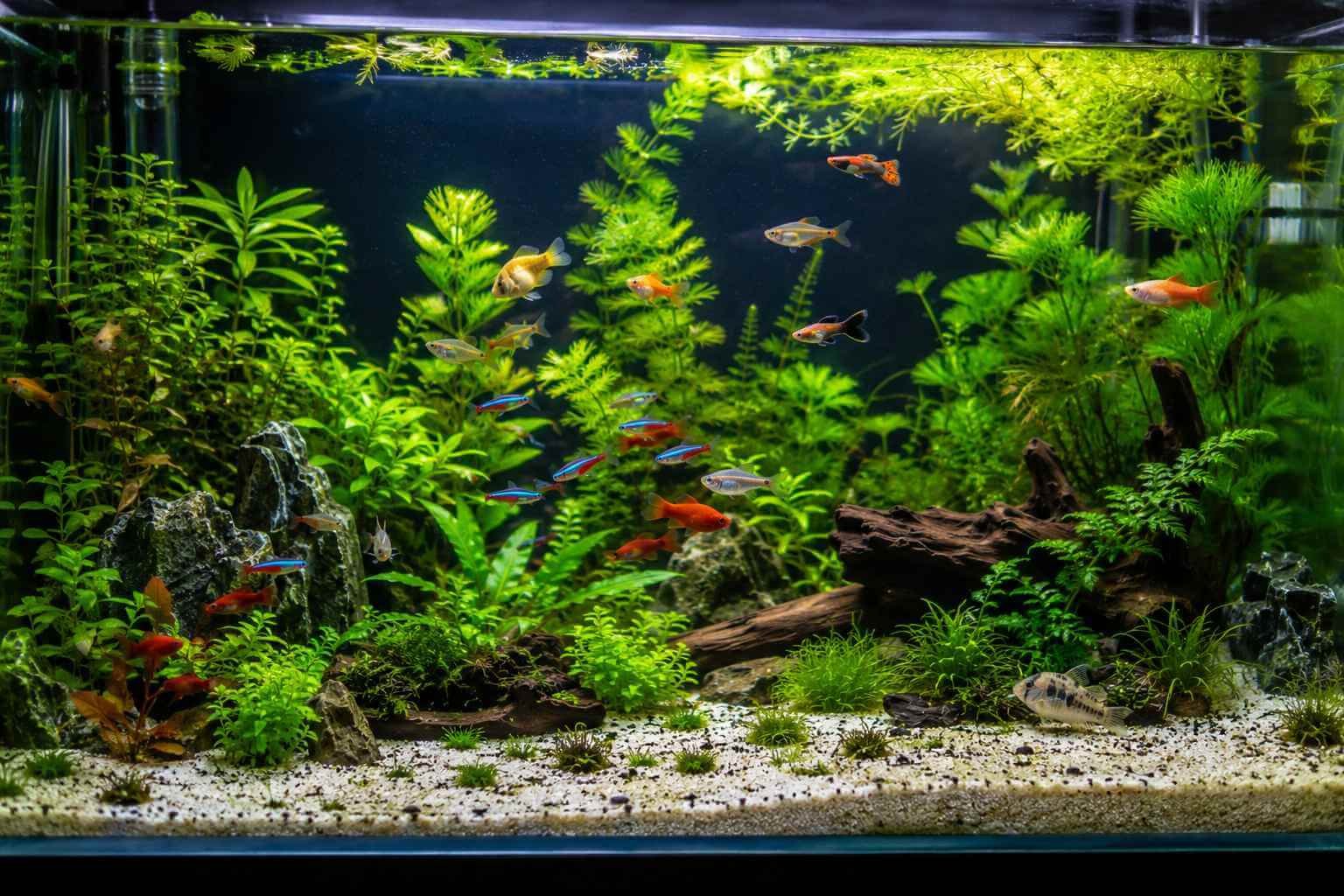
- Consider whether live plants are present. They help absorb excess nutrients and can give you a little more margin for error.
Quick Recap: Avoiding Fish Feeding Mistakes
Getting feeding right comes down to a few consistent habits:
- Feed only what fish can eat in 2–3 minutes.
- Stick to a consistent, species-appropriate schedule.
- Match food type to each fish’s natural diet.
- Remove uneaten food promptly.
- Adjust portions as your tank and fish population change.
None of these fixes require special equipment or expert-level skill but just a bit more attention at feeding time. Get the basics right, and you’ll cut down on cloudy water, algae, and stress-related disease before they ever become a problem.
Frequently Asked Questions
How do I know if I’m overfeeding my fish?
Common signs include food still floating or sitting on the substrate after a few minutes, cloudy or foul-smelling water, excess algae growth, and fish that appear bloated or lethargic.
Is it okay to skip a day of feeding fish?
Yes. Most healthy adult fish can safely go one or two days without food, and a weekly fasting day can actually help prevent digestive issues linked to overfeeding.
How much food does a fish actually need?
As a general guideline, feed an amount your fish can fully consume within 2–3 minutes, once or twice a day. Exact needs vary by species, age, and water temperature.