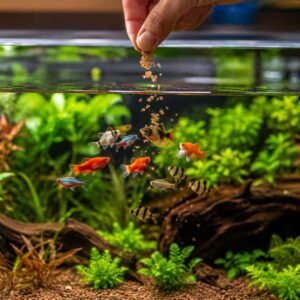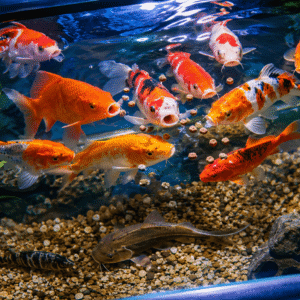
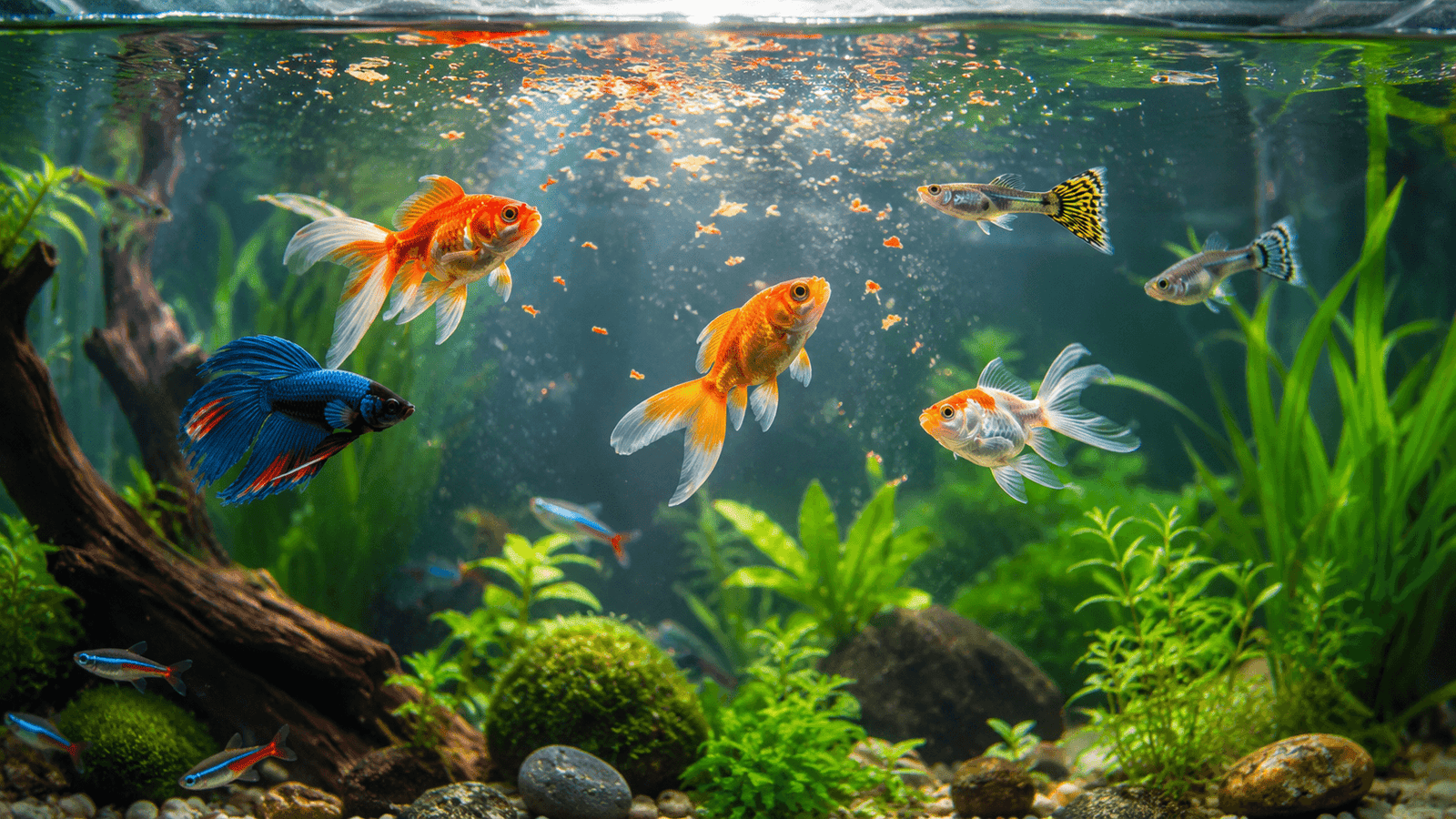
If you have ever stood in front of your tank wondering whether you are feeding your fish too much or too little, you are not alone. It is one of the most common questions new aquarium owners in Pakistan ask us at Aqua Street, and honestly, it is also one of the easiest things to get right once you understand a few simple rules.
In this guide, we will walk you through exactly how much fish food to feed daily, how often you should be feeding your aquarium, and the warning signs that tell you when something is off.
Why Getting the Right Amount of Fish Food Matters
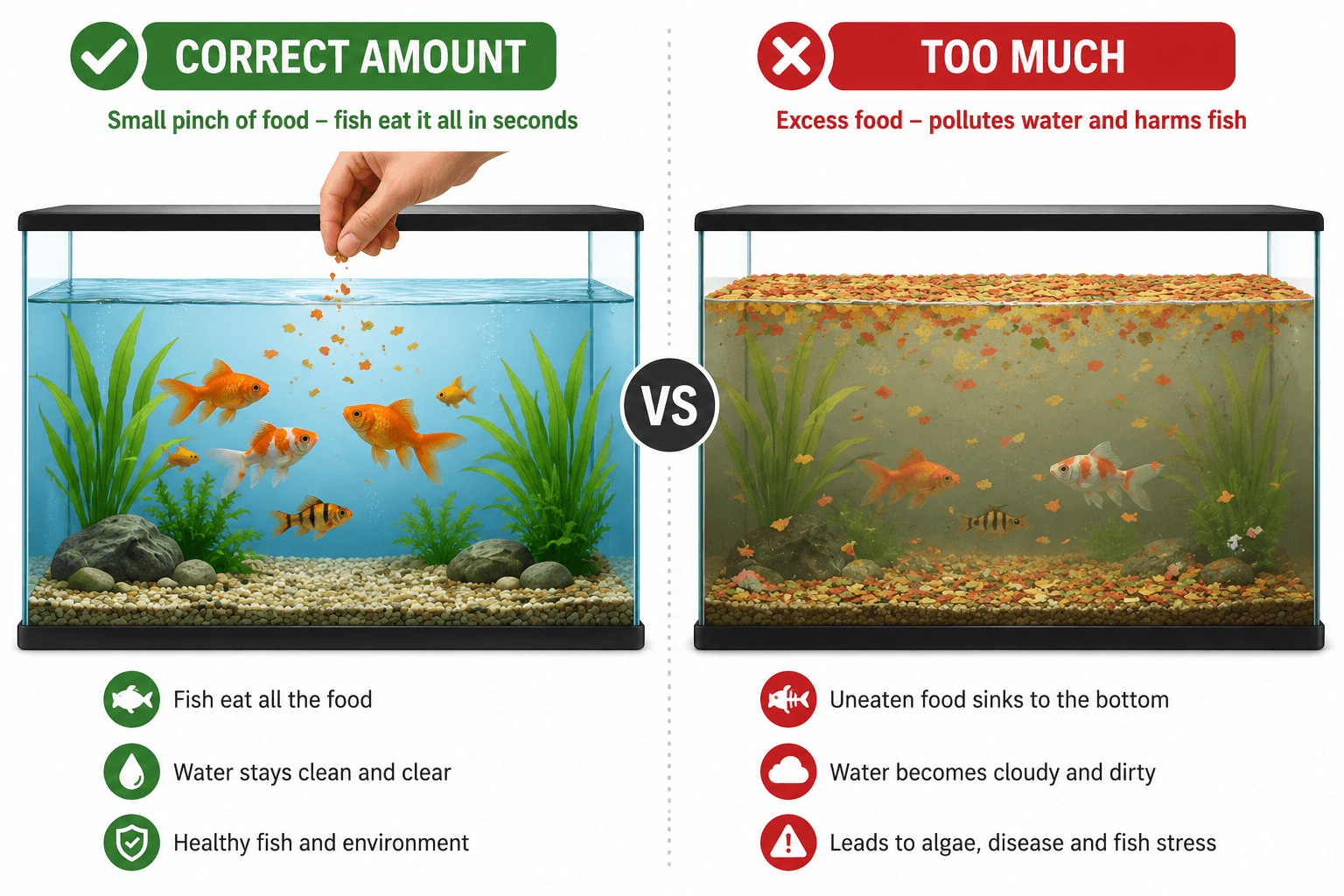
Most people assume that feeding more food means healthier, happier fish. In reality, it is the opposite. Uneaten food does not just disappear, it sinks to the bottom of the tank, breaks down, and pollutes the water. This is the single biggest cause of cloudy water, algae problems, and sick fish in home aquariums.
Feeding too little is rarely the problem. Feeding too much almost always is.
How Much Fish Food Should You Actually Feed?
A simple rule that works for almost every type of fish: only give your fish an amount they can completely finish within two to three minutes.
Here is how to test it in your own tank:
- Add a small pinch of food to the water.
- Watch your fish closely for two to three minutes.
- If every bit of food is gone and your fish still look interested, you can add a little more.
- If food is still floating or sitting on the gravel after five minutes, you added too much. Remove the leftovers with a small net so they do not rot in the tank.
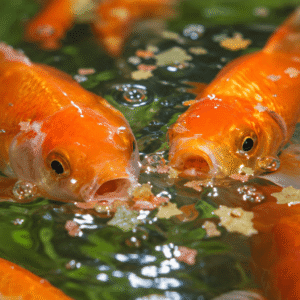
Over time, you will get a feel for exactly how much your specific fish need, and it becomes second nature.
How Often Should You Feed Aquarium Fish?
For most community fish such as goldfish, guppies, mollies, and tetras, feeding once or twice a day is enough. If you feed twice, a good routine is once in the morning and once in the evening, roughly eight to ten hours apart.
A few exceptions worth knowing:
- Bettas do well with a small feeding twice a day, since they are prone to overeating and bloating.
- Bottom feeders such as catfish and loaches should be given sinking food, since they will not compete well for flakes floating at the surface.
- Young or growing fish can be fed a little more often, since they use up energy faster than adult fish.
Many experienced fish keepers also recommend one fasting day a week, where you skip feeding entirely. This gives your fish a chance to fully digest and helps prevent constipation and bloating, especially in bettas and goldfish.
Signs You Are Overfeeding Your Fish
Watch for these warning signs in your tank:
- Cloudy or hazy water that does not clear up after a water change
- Leftover food sitting on the gravel or floating hours later
- A sudden increase in algae growth
- Fish looking bloated or sluggish
- A film or foam forming on the surface of the water
If you notice two or more of these signs, cut back on both the amount and frequency of feeding, and do a partial water change to help the tank recover.
Signs of Underfeeding
This is far less common, but it can happen, especially in larger or heavily planted tanks where fish also graze on algae. Signs include fish that look visibly thin, become unusually aggressive toward each other at feeding time, or spend most of the day searching the substrate for scraps. If you notice this, simply increase the amount slightly and observe again using the two to three minute rule.
Choosing the Right Fish Food Makes This Easier
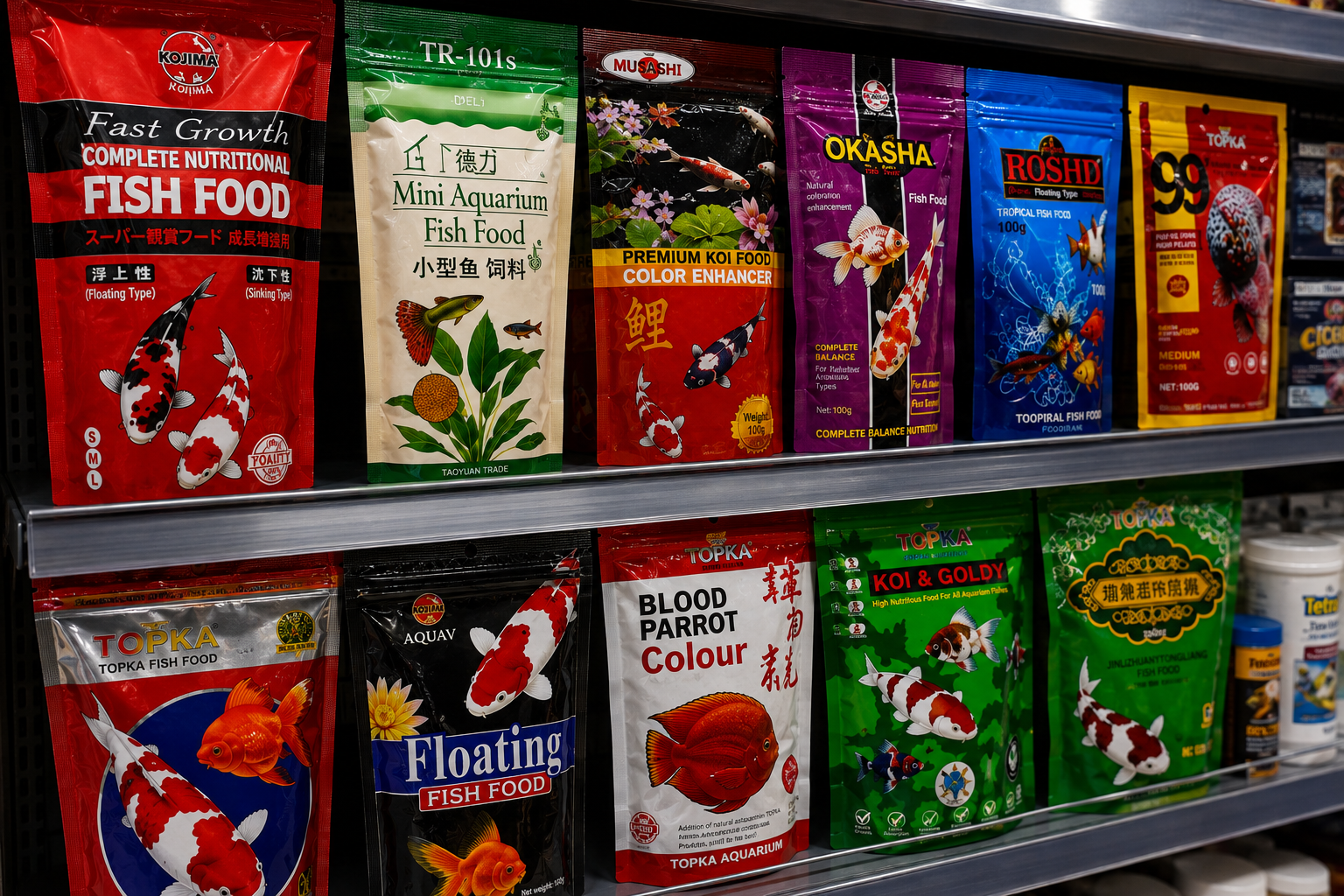
Part of feeding correctly is using the right type of food for your fish in the first place. A high quality fish food is easier to portion accurately, floats or sinks the way it is meant to, and does not cloud your water as quickly if a little is left over.
At Aqua Street, we stock genuine fish food for every type of tank, including flakes, pellets, floating food, and sinking food for bottom feeders, with nationwide delivery and Cash on Delivery across Pakistan. You can browse our full fish food range here: [Link to Fish Food category page on aquastreet.pk]
Frequently Asked Questions
How much fish food should I feed my fish each day?
Only give an amount your fish can completely eat within two to three minutes, once or twice a day. It is always better to feed slightly less than to overfeed.
Is it okay to skip feeding my fish for a day?
Yes. One fasting day per week is a common and healthy practice recommended by many aquarium keepers, and it helps prevent digestive issues.
What happens if I overfeed my fish?
Leftover food breaks down in the tank, which pollutes the water, raises ammonia levels, and can lead to cloudy water, algae growth, and sick fish over time.
Do all fish need to be fed the same amount?
No. Bettas, goldfish, bottom feeders, and young fish all have slightly different feeding needs. As a general rule, feed smaller amounts more carefully for bettas, and use sinking food for bottom dwelling fish.
Conclusion
Feeding your fish correctly is one of the simplest ways to keep your aquarium healthy, and it comes down to one habit: feed only what your fish can finish in two to three minutes, once or twice a day. Once you build this habit, you will notice clearer water, healthier fish, and far fewer tank problems.
If you are looking to stock up on genuine fish food, filters, or any other aquarium accessories, Aqua Street delivers nationwide across Pakistan with Cash on Delivery. Visit our Fish Food category to see everything we have in stock.